
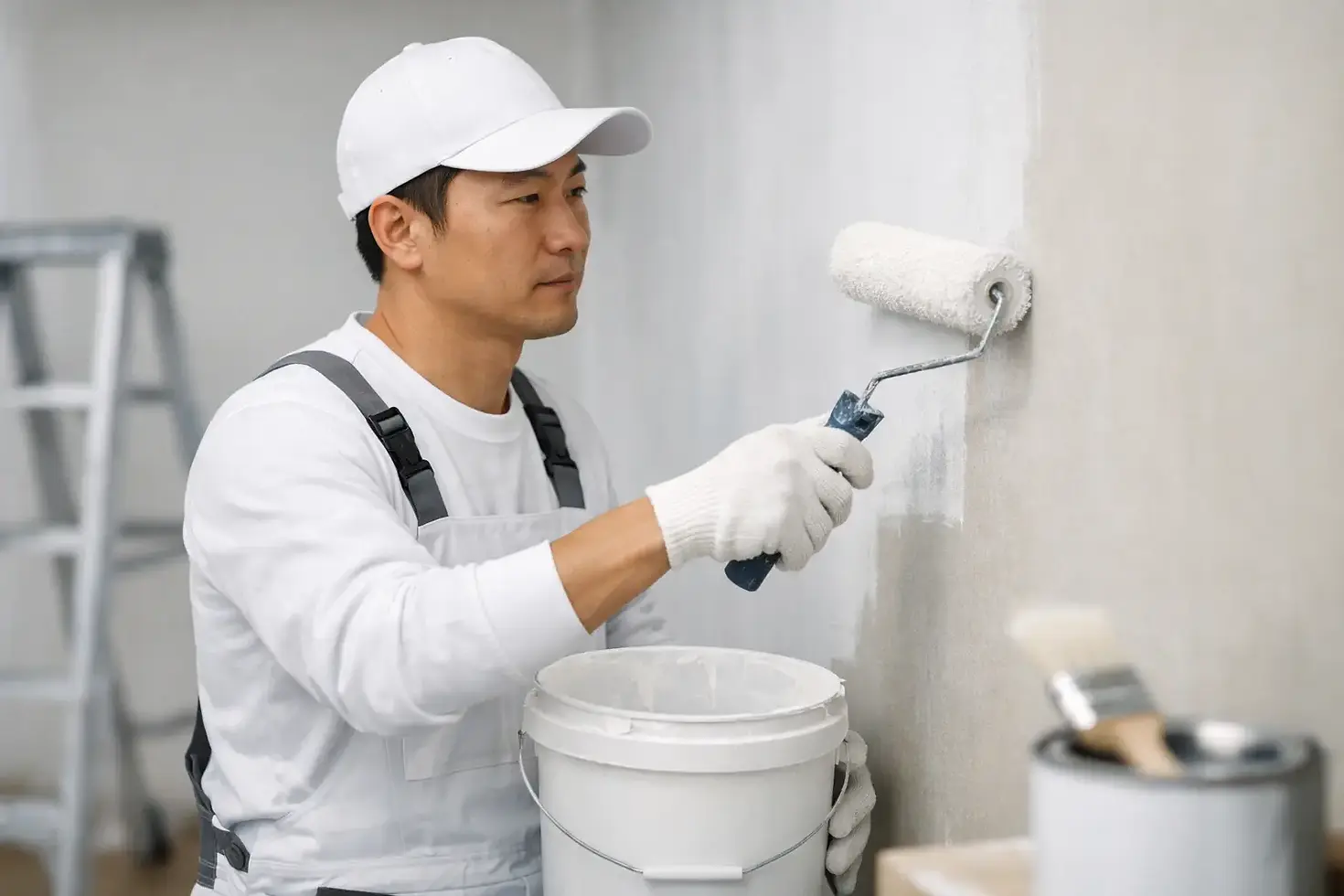
Undercoat and Primer Painting Services Explained
- misun kim
- Jul 8
- 6 min read
A paint job can look sharp on day one and still fail months later if the surface underneath was not prepared properly. That is why undercoat and primer painting services matter so much. They are not an optional extra added to a quote for the sake of it. They are the base that helps the finish coat bond, cover evenly and hold up to daily wear.
For homeowners, builders and property managers, this part of the process is often where long-term value is won or lost. A good finish starts well before the final coat goes on. If the substrate is patchy, porous, stained, repaired, glossy or previously painted with an incompatible product, the topcoat alone will not fix it. It may hide the issue briefly, but it rarely performs the way it should.
What undercoat and primer painting services actually do
Primer and undercoat are often spoken about together, but they do slightly different jobs. Primer is used to help paint adhere to the surface and to seal difficult materials. Undercoat helps create an even base for the finishing coats, improving coverage and consistency in the final appearance.
On some projects, one product can do both jobs. On others, separate products are the better choice. It depends on the surface condition, the material being painted, the previous coating, and the finish being applied. Timber, plasterboard, metal and masonry all behave differently, so using the same approach across every project is rarely the best option.
This is where experience counts. A licensed painting team will assess whether the surface needs stain blocking, moisture resistance, adhesion support or simply a more uniform base. That decision affects not only how the paint looks, but how long it lasts.
Why proper preparation changes the final result
Most paint failures begin below the topcoat. Peeling, flaking, uneven sheen, patchiness and poor coverage usually trace back to inadequate preparation or the wrong base coat. When a surface has not been primed or undercoated properly, the final paint can absorb unevenly or struggle to bond.
In a residential setting, that might show up as visible repairs on a wall, flashing on new plasterboard, or timber trim that bleeds through the paint. In a commercial or industrial environment, the stakes can be higher. A rushed coating system can create maintenance issues, lead to premature repainting and interrupt operations sooner than expected.
Good preparation also improves efficiency. That may sound backward if you are looking at an extra step, but it often saves time and cost across the full project. A properly sealed and undercoated surface usually needs less correction later. Coverage becomes more predictable, finish coats apply more evenly, and the result is easier to control from room to room or area to area.
Where undercoat and primer painting services are most needed
Some surfaces almost always need attention before the finish coat. New plasterboard is one of the most common. It can absorb paint unevenly, especially where joint compound has been used, which leaves visible differences once the wall dries.
Bare timber is another. Without the right primer, tannins can bleed through, and topcoats may not adhere consistently. On previously painted surfaces, the issue is often compatibility. If the old surface is glossy, chalky, stained or damaged, applying fresh paint straight over the top is a risk.
Metal also needs the correct system, especially where corrosion is present or where a specific protective coating is required. Masonry and rendered surfaces can need sealing to manage porosity and ensure a stable base. In practical terms, the more varied the surface, the more valuable a tailored preparation plan becomes.
Undercoat and primer painting services for homes
In homes, preparation is often what separates a quick cosmetic update from a result that genuinely lifts the property. Walls, ceilings, doors, trims and exterior surfaces all respond differently depending on age, moisture exposure and previous maintenance.
If a homeowner is repainting after repairs, water stains, smoke marks or patching work, primer becomes especially important. It helps block through stains and evens out the substrate so the final coats look consistent. Without it, those marks can keep reappearing or show through as dull patches.
For occupied homes, professional preparation also helps keep the process cleaner and more controlled. The right team will organise the sequence properly, protect surrounding areas, and complete the work with minimal disruption. That matters just as much as the coating system itself when people are living in the property during the job.
Commercial and industrial sites need a more considered approach
Commercial and industrial painting work has different pressures. Appearance still matters, but timing, coordination and durability are often just as important. Offices, warehouses, strata properties and active sites need preparation that suits the environment and the schedule.
A poorly prepared repaint in a workplace can mean uneven finishes in client-facing areas or unnecessary touch-ups after handover. On active sites, the wrong primer or undercoat can reduce coating life and create avoidable maintenance cycles. That is not only frustrating - it can affect budgets, access planning and business continuity.
This is why experienced contractors do not treat undercoats and primers as a standard line item with a one-size-fits-all product. They assess the job, the usage of the space and the expected wear. In many cases, better preparation is what allows the project to stay on time and on budget because the system performs the way it should from the start.
Not every project needs the same system
This is one of the biggest misconceptions in painting. People often ask whether primer is always necessary or whether undercoat can be skipped if the surface already looks sound. Sometimes a repaint over a clean, stable and well-bonded existing coating may need less intervention. Sometimes spot priming is enough. But there are plenty of cases where cutting this step creates visible and costly problems later.
The answer depends on the substrate, the surface condition and the finish being specified. Dark-to-light colour changes, repaired sections, bare patches, stained areas and porous materials all need more care. A premium topcoat cannot compensate for a weak foundation.
A professional painter should be able to explain why a certain preparation system is recommended and where it adds value. That transparency matters. Clients should know what they are paying for and what outcome it supports.
What to look for in undercoat and primer painting services
The quality of these services comes down to more than product selection. It is also about how thoroughly the surface is cleaned, sanded, repaired and assessed before coatings begin. Even the best primer will struggle if it is applied over dust, grease, unstable paint or moisture issues.
Look for a painting contractor that takes time to scope the condition of the surface properly, not just the square metre rate. Experience across residential, commercial and industrial work is useful because it shows the team understands different environments and can adapt the system accordingly.
It also helps to work with painters who are clear about timelines, site protection and expected results. Professional conduct matters here. Preparation can be the least visible part of the job while it is happening, but it has one of the biggest impacts on the finished result.
For Sydney property owners and project managers, that often means choosing a contractor who values workmanship over shortcuts. J&P Premier Painting takes that approach because clients are not just paying for paint on a surface. They are paying for a finish that holds its appearance, performs properly and reflects well on the property.
The real value is in the finish that lasts
A lot of painting decisions come down to where you want to spend your budget. You can spend less upfront by reducing preparation, but that often means spending more sooner on corrections, touch-ups or a full repaint. Undercoat and primer painting services are one of the clearest examples of value over guesswork.
When the base is right, everything above it works better. Coverage improves. Colours sit more evenly. The finish looks cleaner and wears the way it should. And when the work is done by a professional team that respects your time, site and expectations, the whole project runs more smoothly.
If you are planning painting work, ask about the preparation before you focus on the final colour. That is usually where the standard of the job reveals itself.


Comments