
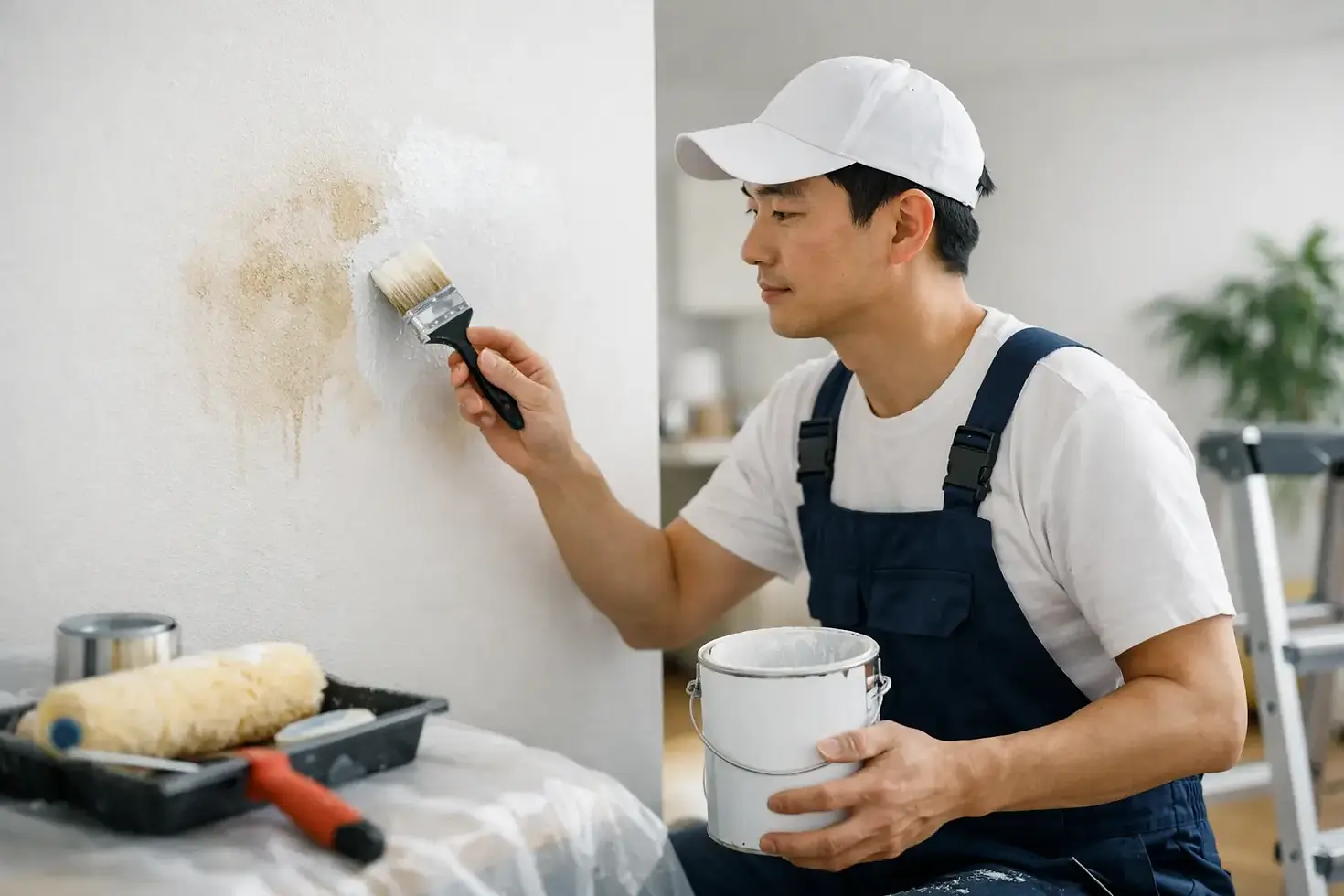
Top Stain Blockers for Clean Interior Walls
- misun kim
- 1 day ago
- 6 min read
A fresh coat of paint will not hide every problem. Water rings on a ceiling, yellow nicotine staining, crayon marks and timber tannins can work their way back through even premium paint if the surface is not properly sealed first. Choosing the right top stain blockers is one part of the job. Identifying the cause, preparing the area carefully and applying the product correctly are what deliver a finish that stays clean.
For homeowners planning interior house painting in Sydney, stain blocking is often the difference between a room that looks newly painted for years and one that develops discoloured patches within weeks. It is a small stage in the painting process, but it deserves close attention.
What stain blockers actually do
A stain blocker is a specialist primer designed to seal troublesome marks so they cannot bleed through the next coats of paint. Standard undercoat helps with adhesion and creates a more even base, but it is not always made to hold back stains. Where the substrate is contaminated or prone to bleed, a dedicated stain-blocking primer is the safer choice.
The best product depends on what is causing the mark. A water stain from a past leak behaves differently from smoke residue, while knots and tannins in timber need a coating that can isolate natural oils and colour. Applying the wrong primer, or simply adding more topcoats, may hide the stain briefly without solving it.
A professional painter will also check whether a stain is active. If a ceiling mark is still damp because of a plumbing or roof issue, painting over it is not a repair. The source of moisture must be fixed and the area fully dried before any sealer is applied.
Top stain blockers by stain type
There is no single product that is best for every wall or ceiling. The top stain blockers are chosen according to the surface, the stain and the room conditions.
Water marks and ceiling stains
Brown or yellow water marks are common around old leaks, bathrooms and air-conditioning issues. Once the leak has been repaired and the plasterboard has dried, a stain-blocking primer can seal the discolouration before repainting. In some cases, damaged plasterboard, bubbling paint or softened material needs to be repaired or replaced first.
This is where preparation matters most. Loose paint is removed, edges are feathered, repairs are filled and sanded, and dust is cleaned away. The isolated repair is then sealed and blended into the broader ceiling or wall area so the final sheen looks consistent.
Smoke, nicotine and cooking residue
Smoke and nicotine can leave a yellow-brown film across entire rooms, not just isolated marks. Cooking grease can create similar adhesion problems around kitchens. These contaminants should be thoroughly cleaned before priming. If residue remains on the surface, the primer may not bond as intended and odours can persist.
For heavier contamination, a high-performance stain and odour-blocking primer is usually required. The choice between water-based and solvent-based systems depends on the severity of the contamination, ventilation available and the existing coating. Low-odour products can be useful in occupied homes, but performance should never be sacrificed where the staining is substantial.
Timber knots, tannins and timber trims
Timber can release natural resins and tannins that show as yellow, brown or reddish marks through pale paint colours. This is particularly noticeable on knotty timber, older skirting boards, architraves, windows and feature timber being repainted.
Spot priming each knot may be enough for minor bleed-through. For heavily stained timber or a full colour change, sealing the entire surface is often more reliable. Correct sanding, dust removal and a compatible primer are essential, especially where a crisp white finish is expected.
Ink, crayons, markers and unknown marks
Children's bedrooms, study walls and high-traffic hallways can collect marks that ordinary wall paint will not cover. Permanent marker, ink, lipstick and dye-based stains are especially unpredictable. A test area is sensible before coating a whole wall, as some stains can react and reappear.
Unknown staining deserves a cautious approach. A professional painter may seal a small section, allow it to dry, then check for bleed before continuing. That extra time is far less costly than repainting a room after the stain returns.
Preparation is the real foundation
Stain blocking is not a shortcut around preparation. At J&P Premier Painting & Maintenance, the focus is on resolving the condition of the surface before applying the finishing coats. This protects the appearance of the paintwork and avoids preventable call-backs.
The process begins with an inspection of the affected area and its surrounds. We look for moisture, cracking, mould, flaking paint, surface contamination and signs that a previous repair has failed. The area is then cleaned, scraped, sanded and repaired as needed. Only after it is sound, dry and dust-free is the selected stain blocker applied.
Drying time also matters. A primer that feels dry to touch may still need more time before recoating, particularly in cooler or humid Sydney conditions. Rushing the process can compromise adhesion, gloss consistency and stain resistance. Quality painting is built in layers, and each one needs the correct conditions to perform.
Water-based or solvent-based stain blocker?
Homeowners often ask whether water-based products are enough. The honest answer is that it depends. Modern water-based stain blockers can perform very well on many common marks, dry quickly and create less odour. They are often a practical option for light staining, routine repairs and occupied family homes.
Solvent-based or shellac-style sealers can offer stronger blocking power for persistent water marks, nicotine, smoke, knots and difficult dyes. However, they may have a stronger smell, require more careful ventilation and take additional planning in furnished homes. The right system is selected for the problem, not simply because it is familiar or faster to use.
Compatibility is equally important. The primer must suit the existing surface and the intended topcoat. This is particularly relevant when repainting older oil-based trims, glossy finishes or decorative surfaces. A quality result comes from a complete coating system that works together.
When spot priming is enough and when it is not
A small, isolated mark can often be spot primed, then finished with paint across the full wall or ceiling plane for an even appearance. But spot treatment is not always the best option. If there are multiple water marks, widespread smoke staining or patchy previous repairs, treating only the visible areas can leave variations in porosity and sheen.
Ceilings are a common example. Even when a water stain is sealed successfully, touching up a small patch can leave a noticeable difference in finish under natural light. Repainting the whole ceiling is often the cleaner, more durable solution. It provides a uniform result and gives the room the fresh presentation homeowners expect.
For premium interiors, especially homes with carefully selected neutral colours, feature walls or luxury decorative finishes, this attention to consistency is worth it. A flawless finish is not just about covering a stain. It is about ensuring the repaired area disappears into the room.
Common mistakes that lead to stains returning
The most common mistake is painting directly over a stain with regular wall paint. Another is sealing a water mark before fixing the leak that caused it. Both can produce a short-term improvement, followed by a frustrating return of the problem.
Poor cleaning is another issue, particularly with kitchen residue and nicotine. So is applying primer too thinly, skipping recommended drying times or using a topcoat that is incompatible with the primer. These details may not be obvious on the day, but they show up later as yellowing, patchiness, peeling or uneven sheen.
Mould should also be treated as a moisture and ventilation issue, not simply a stain. It needs appropriate cleaning and the underlying cause should be addressed. Painting over active mould without correcting condensation, leaks or poor airflow will not provide a lasting result.
A better result starts before the paint goes on
If you have water marks, smoke staining, persistent timber bleed or walls that have been unsuccessfully repainted before, it is worth having the surface assessed before choosing colours. The correct stain blocker, applied over careful preparation, can save time, avoid repeat work and protect the finish you are investing in.
J&P Premier Painting & Maintenance provides considered interior painting solutions for Sydney homeowners who value clean workmanship and long-lasting results. Request a free quote to discuss the condition of your walls or ceilings, the best preparation approach and a finish that will look right long after the brushes are packed away.


Comments